
Only surviving Soviet security footage of Dr. Svetlana Korbet at Lake Moreau prior to her disappearance with the so called “Bolotnaya Tvar’ (In English- “Swamp Thing”) in 1981
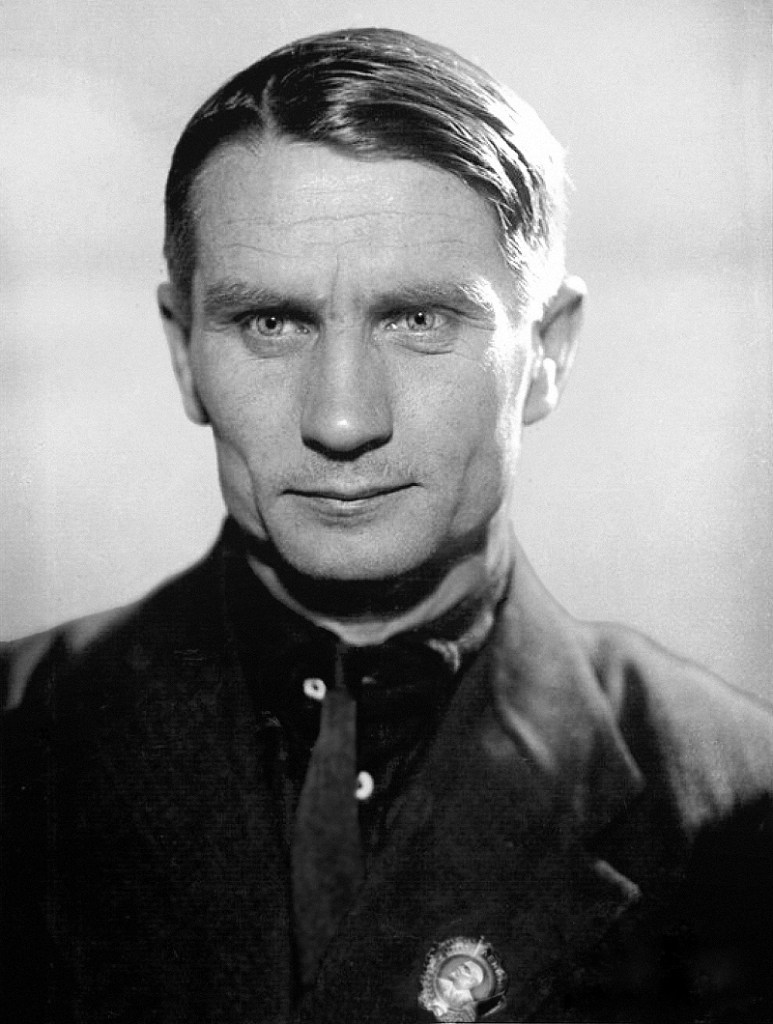
“I was the first man to take up the question of cross species attraction armed only with antiseptic surgery, and with a really scientific knowledge of the laws of growth. Yet one would imagine it must have been practiced in secret before. Such creatures as the Siamese Twins—And in the vaults of the Inquisition. No doubt their chief aim was artistic torture, but some at least of the inquisitors must have had a touch of scientific curiosity. No we are not monsters, but rather we are here to create new life, which we have done spectacularly.”
~ Doctor Trofim Lysenko’s Response to the Soviet Academy of Sciences, 1969.
In the jungles deep within Kukaunaland during the 1960s, when the country was still a part of Zaire, the Soviets set up a vast futuristic looking military base and a clandestine biological laboratories they called with dark humor, “Moreau labs,” so named because their twisted experiments with humans, animals and plants. In fact the main facility was located at a small lake, which was more of a swamp, the researchers had dubbed Lake Moreau, and it was from there that bizarre creatures of the forest, both above and below water, were created using pseudo science straight from the pages of science fiction. For most of the 30 years the remote science outpost was run by the enigmatic Dr. Lysenko, under whom his subordinates conducted a series of bizarre and controversial experiments. Using vivisection, a surgical procedure involving the dissection of living animals, Dr. Lysenko created hybrid creatures called “Beast Men” by surgically modifying animals to resemble and partially adopt human characteristics as well as fully adopt human desires.

Объект 482-М (Ob’yekt 482-M) — “Facility 482-Yoreau”
Internal Code Name:
Проект ЗВЕРЬ (Proyekt ZVER’) — Project BEAST
The small lake according to the CIA is called “Nkombolwe” (pronounced: n-KOM-boh-lweh), which roughly roughly translates to “The Water of Spirits” or “The Place of Changing Souls,” which as will be explained, is appropriate. US intelligence (early 1980s), after debriefing defectors, adopted “Lake Moreau” for its cultural reference to H.G. Wells’ The Island of Dr. Moreau — an inside joke among CIA analysts for the biological horrors hidden there. Nkombolwe has an ancient place in Kukuanaland myth as it is believed to be the boundary between the human world and the spirit world. Shamans taught that those who entered its mists might return different — blessed or cursed depending on the spirits’ will. Animal spirits (particularly the Okapi, Panther, and Crocodile) were said to reside in the lake and transform those they judged worthy. The Soviets dismissed these legends publicly as superstitious nonsense — but internally, they believed the local biochemistry (high sulfur, rare microorganisms) might enhance Mahala Zeta’s psychoactive effects. Which, after reviewing the story of the only known American to have visited the lake, a Darla Padgett, a second cousin to the former wife of current RAF Air Marshal Winston Churchill the Fourth, we conclude should not be dismissed out of hand. Her story, as reported back to the CIA by Dr. Robert Lusaka, is on file.
However, for all of the research that the team of Soviet scientists conducted the did not foresee the fact that in order for these creatures to be birthed, they would need an inexhaustible supply of adult aged women to serve as surrogates and also a way to compel those chosen to willingly stay on. Fortunately there were many tribal women whom were willing to assist as the pay for their services for laundry, cooking and cleaning was attractive as were the working conditions, which were clean and pristine. In exchange for their hard work they in turn were given excellent medical care, and when they voluntarily became pregnant (during mandatory gynecologic exams), they were monitored daily and when the time was near, they were sedated and labor was induced. In return, the women, by the Soviet era standards of the day were paid handsomely.
Once birthed, these creatures were then studied and, unlike the creatures of H.G. Wells cautionary tale, treated humanly and often times lovingly. Perhaps to lovingly with some of the creatures as captured on hidden camera, like that of one scientist mating with an experiment he named “Valkyrie” who then killed him and his co-creator scientist in one of the first gene splicing experiments conducted at Lake Moreau. After the creature killed and escaped it was never seen again; however, legends say that it continues to kill and mate with unsuspecting male and female victims in the dark vastness of the African jungle; however now it is simply known as the legendary aptly named “Kongamato.”
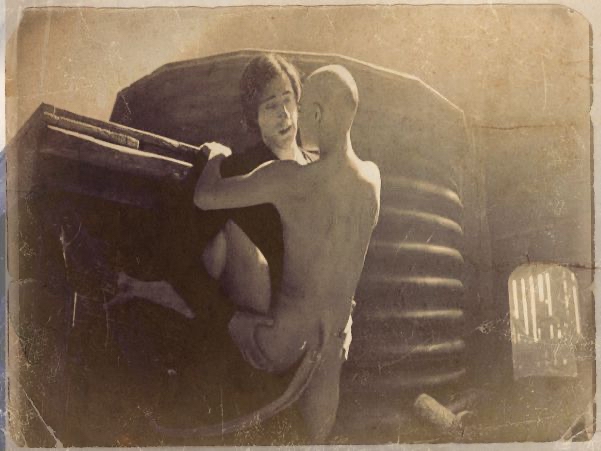

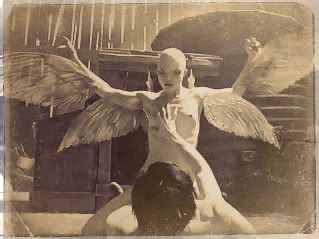
And then there is the tale of the former Olympic swimming champion and Soviet army geneticist Svetlana Korbet, who mated an ape with cells from a lizard and created a hybrid creature for which the local legend calls the “Jengu man,” who was caught on camera attempting to capture and mate with his creator before being chased back into the swampy lake. After the creature disappeared Dr. Korbet was ordered to return to Moscow; however, in defiance she escaped into the jungle and was never heard from again, though many suspect she and the Bolotnaya Tvar mated and possibly had offspring, though that has never been confirmed or even denied by the Soviet laboratory workers who even produced artwork of what they hoped was a happy couple. The legend of her perverse betrayal was later turned into a perverse underground Soviet horror pornographic snuff movie called “Sushchestvo iz Chernoy Laguny”.

The enigmatic disappearance of Dr. Svetlana Korbet, a former Soviet Olympic swimming champion and army geneticist, continues to captivate and perplex. Renowned for her striking beauty and formidable intellect, Dr. Korbet once posed topless for a Soviet propaganda piece extolling the superiority of Soviet women over their Western counterparts. Her last recorded measurements were 36D-25-36, with a natural 36D bust, standing at 5 feet 3.5 inches (1.61 meters) and weighing a lean, muscular 120 pounds due to rigorous training.

Dr. Korbet’s groundbreaking work involved the controversial Mahala plant and its potent derivative, Mahala Zeta. Reports suggest that exposure to these substances led to altered behaviors, including intimate relations with both men and human-animal hybrids. One of her most audacious experiments involved splicing ape and lizard DNA, resulting in a hybrid creature dubbed the “Jengu man.” This being was reportedly captured on film attempting to abduct and mate with Dr. Korbet before retreating into a swampy lake.
Following the creature’s disappearance, Soviet authorities ordered Dr. Korbet to return to Moscow. Defying these orders, she vanished into the jungle and was never seen again. Speculation abounds that she may have mated with the creature, known locally as the Bolotnaya Tvar, and possibly bore offspring. Soviet laboratory workers neither confirmed nor denied these rumors but did produce artwork depicting what they envisioned as a harmonious union. This tale inspired a Soviet horror-pornographic film titled “Sushchestvo iz Chernoy Laguny.”


Publicity stills and artwork from the Soviet pornographic movie “Sushchestvo iz Chernoy Laguny”
Dr. Korbet’s disappearance draws intriguing parallels to the 19th-century explorer Dr. Jane Livingstone-Porter. In the 1850s, Dr. Livingstone-Porter ventured into the region known as Kukuanaland in search of the Mahala plant. After consuming its intoxicating berries, she became lost in the jungle and encountered Chief Mbeke Leopold of the Futanari tribe, with whom she formed a profound connection. Her subsequent return to England in 1859 with artifacts and tales of an advanced subterranean civilization called Zinjha was met with ridicule, leading her to return to Africa, where she vanished. Legend holds that she assumed the mantle of “Ayesha,” the immortal queen of the underworld, a narrative chronicled in H. Rider Haggard’s novels.
The Soviet Union’s clandestine activities in the Congo Basin, particularly at Facility 482-Moreau (Project BEAST), involved unethical genetic experiments and the weaponization of Mahala derivatives. These endeavors aimed to exploit the region’s biological and mystical resources, echoing the colonial pursuits of earlier European powers. The modern state of Kukuanaland, emerging from the Democratic Republic of the Congo in the early 21st century, became a nexus of such dark legacies, ruled by the despotic Hermann Katanga. Under his regime, Mahala was weaponized into a potent form called M2, used to control the populace through the water supply.
Speculation persists that Dr. Korbet, influenced by Mahala and her own scientific curiosity, may have discovered the legendary gate to the underworld within King Solomon’s Mines, akin to Dr. Livingstone-Porter’s alleged journey. Given her expertise and the parallels in their stories, it’s conceivable that Dr. Korbet ventured into realms beyond our understanding, perhaps even assuming a role similar to that of “Ayesha.” While concrete evidence remains elusive, the intertwining of myth, science, and the unexplained continues to fuel intrigue surrounding her fate.
The true extent of Mahala Zeta’s effects remains a matter of heated debate among fringe scientists, blacksite researchers, and esoteric historians. Derived from the rare Mahala plant native to the Congo basin, Mahala Zeta is believed to be a biochemical compound of extraterrestrial origin—one that does more than merely intoxicate. Early Soviet studies revealed that Zeta was not only psychoactive, but also psychotropic, able to override genetic inhibition and awaken dormant ancestral or cryptid DNA within the host. When introduced into living organisms—human or otherwise—it appeared to serve as a mutagenic catalyst, inducing hybridization on a scale previously thought to be impossible outside mythology.
Within Facility 482-Moreau, Soviet geneticists took advantage of these properties to push the limits of biological experimentation. In one particularly alarming project, Mahala Zeta was administered to chimpanzees and war criminals alike, leading to the creation of abominations: upright-walking beasts with bovine features and labyrinthine instincts, others with reptilian skin stretched taut over powerful humanoid frames. To those who had read classical texts, these were unmistakably the return of the Minotaur, the Lizardman, the Satyr—the chimeric beasts of Hellenic underworld legend reborn not through the dark magic of the ancients, but through cold, empirical science and Soviet ambition.
Indeed, if the ancient underworld was ever more than myth, if it were a literal subterrestrial realm intersecting with our own through hidden dimensional seams, then Mahala Zeta was the key once held by gods and now wielded by man. The Greeks told stories of Centaurs who were half-man, half-horse—wild, lustful warriors of the deep woodlands and caves. Recent reports from deep in the Kukuana jungle suggest sightings of similar figures, glimpsed at the edge of dense mist during full moons—bodies built like men, with the torsos of humans rising from the backs of horned quadrupeds. Whether these beings are the result of forgotten DNA activated by Zeta exposure or whether they are refugees from an actual underworld kingdom is unclear, but the resemblance to myth is uncanny.
The Germanians, neo-fascist technocrats descended from the remnants of Hitler’s most loyal disciples, are known to be conducting parallel research—albeit more occult than scientific in nature. With access to stolen Soviet records and ancient scrolls seized from secret Vatican vaults, the self-declared Reich’s Führer, Der Kaiser Adalwolf, has set his sights on reclaiming the underworld gate supposedly lost with the disappearance of Ayesha (Dr. Livingstone-Porter). Believing himself the true heir to the Thule Society’s mystical heritage, Adalwolf has dispatched his elite Neo-SS shock troops, modified with cybernetic implants and synthetic testosterone glands, to Kukuanaland in search of the Gate of Zinjh.
According to intercepted transmissions, the Germanians believe that Mahala Zeta is the “blood of the gods”—the ichor of ancient titans that, when distilled and reactivated, can reshape the body and free the mind from all mortal constraints. Their ultimate ambition appears to be the creation of a genetically engineered, immortal super-race drawn from classical archetypes: Minotaurs for brute strength, Sirens for psychological manipulation, and Centaurs for battlefield adaptability. Some evidence suggests that captured women from aristocratic and academic circles have already been used in these grotesque experiments—bred or fused with these hybrids in dark rituals held beneath the Kalahari sands.
CONCLUSION: If these speculations are even partially accurate, the ancient underworld may no longer be a lost world—it may be actively repopulating itself through the unwitting help of modern tyrants and technocrats. Mahala Zeta is no longer just a narcotic or mutagen—it is becoming the seed of a new pantheon, one whose gods are neither divine nor human, but something in between.
 Mahala Erotica
Leave a comment